Latest news and insights
Why premium spirits brands are turning to ceramic bottles
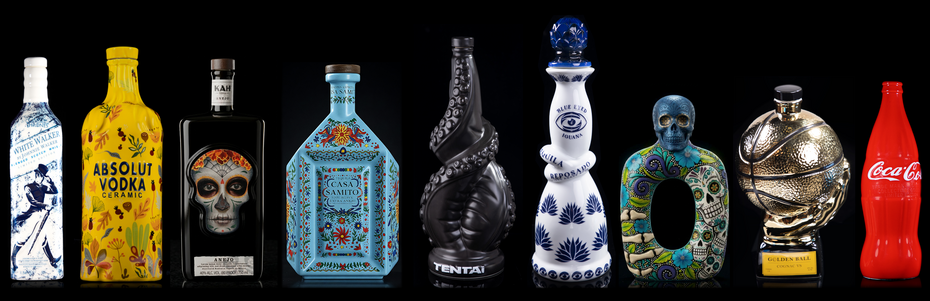
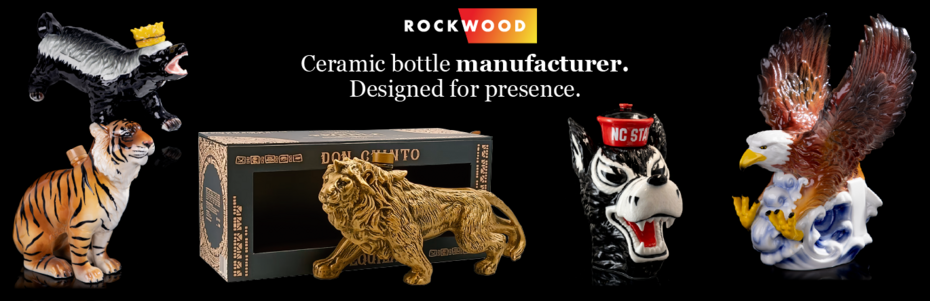
Ceramic bottles refuse to be overlooked
Ceramic offers something traditional glass packaging cannot: both visual and tactile distinction.
Texture. Weight. Sculptural depth. Artistic finishing. A physical presence that changes how consumers perceive a brand before the product is even opened.
As premium spirits brands compete harder for attention and shelf impact, ceramic is becoming one of the most powerful tools in luxury bottle design.
Shelf presence you can feel
Consumers instinctively slow down when interacting with ceramic. They hold it longer. Examine it more closely. Display it more proudly.
Unlike glass, ceramic allows for:
- Deep embossing and sculptural relief
- Complex textures and tactile finishes
- Matte, satin, reactive, and layered glazes
- Organic and unconventional forms
- Artistic hand-finishing and detailing
- Shapes and undercuts beyond the limits of glass
This makes ceramic particularly well-suited for:
- Luxury spirits
- Limited editions
- Ultra-premium product launches
- Special anniversary bottles
- Collector series
- High-end gift sets
Ceramic invites designers to play with form, scale, color, and texture without compromising durability or product integrity.
Rockwood’s ceramic bottles are engineered for production, perfected through painstaking labour, and elevated through craftsmanship into works of art.
A ceramic bottle does not simply contain a spirit. It elevates the ritual around it.
When packaging becomes collectible
Few consumers choose to throw away an artistic ceramic bottle after consuming its contents. This extends brand presence far beyond the first pour.
Unlike disposable packaging, a distinctive ceramic bottle often remains visible in homes, restaurants, bars, and offices for years. It can be used as a decorative piece, water carafe, vase, or collectible memorabilia. In many cases, the bottle itself becomes part of the product’s legacy.
Perceived bottle value and margins increase
While ceramic bottles typically cost more to produce than glass, they are also positioned at significantly higher retail values.
Consumers are prepared to pay more for packaging that feels artistic, luxurious, tactile, and collectible. In premium spirits categories, the bottle itself often becomes part of the purchasing decision.
Distinctive ceramic packaging can help brands strengthen premium positioning, justify higher price points, and create stronger emotional engagement with consumers.
This is particularly valuable for limited editions, luxury gift sets, and collector-focused releases, where presentation plays a central role in perceived value.

Why brands choose Rockwood Ceramics
At Rockwood Ceramics, ceramic bottle production combines Chinese ceramic craftsmanship with European creative direction and industrial manufacturing expertise.
Rockwood’s integrated model allows brands to move from concept to finished bottle faster, more efficiently, and with greater production control:
1. Low ceramic bottle MOQ
Launching a new bottle concept always carries risk.
That is why Rockwood offers accessible production entry points compared to many Western suppliers.
Current ceramic capabilities include:
- Minimum Order Quantities of 6,000 ceramic bottles
- Ceramic bottle molds cost approximately USD $1,200
- New custom molds ready within 45 days
- Mass production timelines of up to 60 days.
This allows brands to test new concepts, launch limited editions, and explore premium packaging without the extreme tooling costs traditionally associated with bespoke bottles.
2. Fully integrated bottle development under one roof
One of Rockwood’s greatest advantages is integration.
Rather than managing multiple disconnected suppliers, clients can centralize development through a single ecosystem that includes:
- In-house design studio
- Glass bottle manufacturing
- Ceramic bottle manufacturing
- Closure development
- Label development
- Decorative finishing
- Spirit sourcing from partner distilleries in Europe
- Bottling
- Packaging
- International shipping
This dramatically reduces friction, delays, and inconsistencies throughout the project lifecycle.
Your bottles are not just imagined for display. They are engineered for production.
3. In-house design expertise built around manufacturability
Many beautiful bottle concepts fail because they were never designed with real-world production in mind. This is increasingly the case with AI-generated bottle designs, which often feature highly complex geometries, sharp angles, extreme undercuts, or structural elements that are visually striking but not immediately feasible for industrial production.
At Rockwood, we bridge the gap between creative freedom and manufacturability.
For more than a decade, Rockwood’s in-house design team in Shanghai, led by French Art Director William Volcoff, has been creating bespoke bottle concepts for spirits brands around the world; developing original designs from the ground up, while ensuring they remain technically viable, cost-efficient, and scalable for production.
Today, that same expertise also allows the team to refine and adapt AI-generated concepts into production-ready bottles without losing the originality of the initial vision.
Because design and manufacturing are developed together from the outset, every project is approached with:
- Technical feasibility
- Production efficiency
- Cost optimization
- Decoration compatibility
- Structural integrity already integrated into the process.
This dramatically accelerates development while avoiding expensive redesign cycles and production limitations later on.
4. Advanced ceramic engineering and leak-proof erformance
One of the historical concerns surrounding ceramic spirit bottles has been leakage, particularly when lower-density or porous clay materials are used.
At Rockwood, solving these technical challenges has been a major focus of continuous R&D and process refinement.
Unlike standard glass production, Rockwood machine-drills the inner neck of each ceramic bottle after firing, allowing for an extremely precise tolerance of approximately ±0.02 mm, compared to roughly ±0.05 mm in traditional glass production. This ensures a highly accurate fit between the bottle neck and the cork or stopper, significantly reducing leakage risks.
The company also uses a single, highly refined porcelain-grade clay sourced locally in China. This dense, high-quality material is significantly less porous than standard ceramic clay commonly used elsewhere.
Combined with systematic porosity and leakage testing before shipment, these advancements have allowed Rockwood to achieve a 0% leakage rate and 0% returns related to leakage defects.
Rockwood’s ceramic bottles are produced using porcelain-grade clay fired at approximately 1300°C, achieving the density and strength associated with porcelain-type materials while maintaining the flexibility required for premium spirits bottle production.
Curious about how a ceramic bottle comes to life? Watch this video for a behind-the-scenes look at Rockwood's manufacturing process!
5. EPZ bottling advantages for international brands
Rockwood’s bottling facility operates within an EPZ (Export Processing Zone) outside Shanghai. This offers significant advantages for international beverage brands, including potential duty and operational efficiencies depending on the project structure and destination market.
The integrated EPZ model also allows imported liquid to be bottled within the zone under streamlined production workflows before global shipment. Combined with Rockwood’s design, manufacturing, and packaging capabilities, this creates a rare end-to-end solution within the premium spirits industry.
Learn more about Rockwood Bottling & Private Labels.
6. Hybrid glass and ceramic bottle innovation
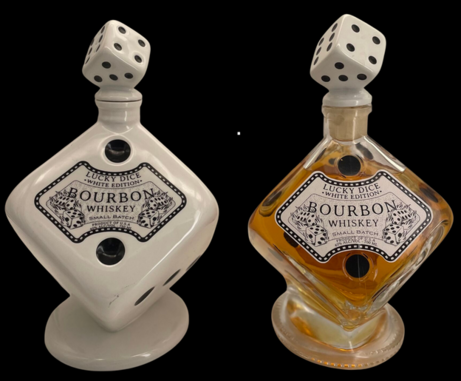
Rockwood also produces hybrid packaging concepts combining glass bodies with ceramic components or closures.
Because both materials are manufactured in-house, Rockwood can ensure:
- Unified design language
- Precise tolerances
- Reliable sealing performance
- Consistent finishing across materials
This opens the door to increasingly expressive, multi-material packaging concepts for premium brands.
What does Henri Berthe have to say? Click here to find out!
Rockwood’s production capacity includes 4 dedicated ceramic bottle lines, offering both semi-automated and hand-painted finishing options. Alongside these, 16 glass production lines manufacture flint, super-flint and black glass bottles, with additional dedicated lines for cobalt blue bottles and miniature formats.
Operations extend beyond bottle manufacturing. With 5 bottling lines equipped with semi-automated and fully automated filling technology, the company offers brands a true one-stop solution. The company offers brands a true one-stop solution, from concept and design to manufacturing, sourcing, spirit production, bottling, and global delivery. At full capacity, Rockwood can produce up to 2 million bottles per day.
Explore Rockwood’s integrated capabilities:
You can connect directly with Founder & CEO Henri Berthe on LinkedIn to begin discussing your next bottle project. And don't forget to follow Rockwood!